
Demand Forecasting
Know what you’ll need before you need it.
WECOMM uses sales and inventory data to help retailers understand upcoming demand, identify products at risk and make smarter reorder decisions.
- What sold
- Real transactions from your registers
- What you have
- Live stock and incoming orders
- What to order
- Recommended quantities per product
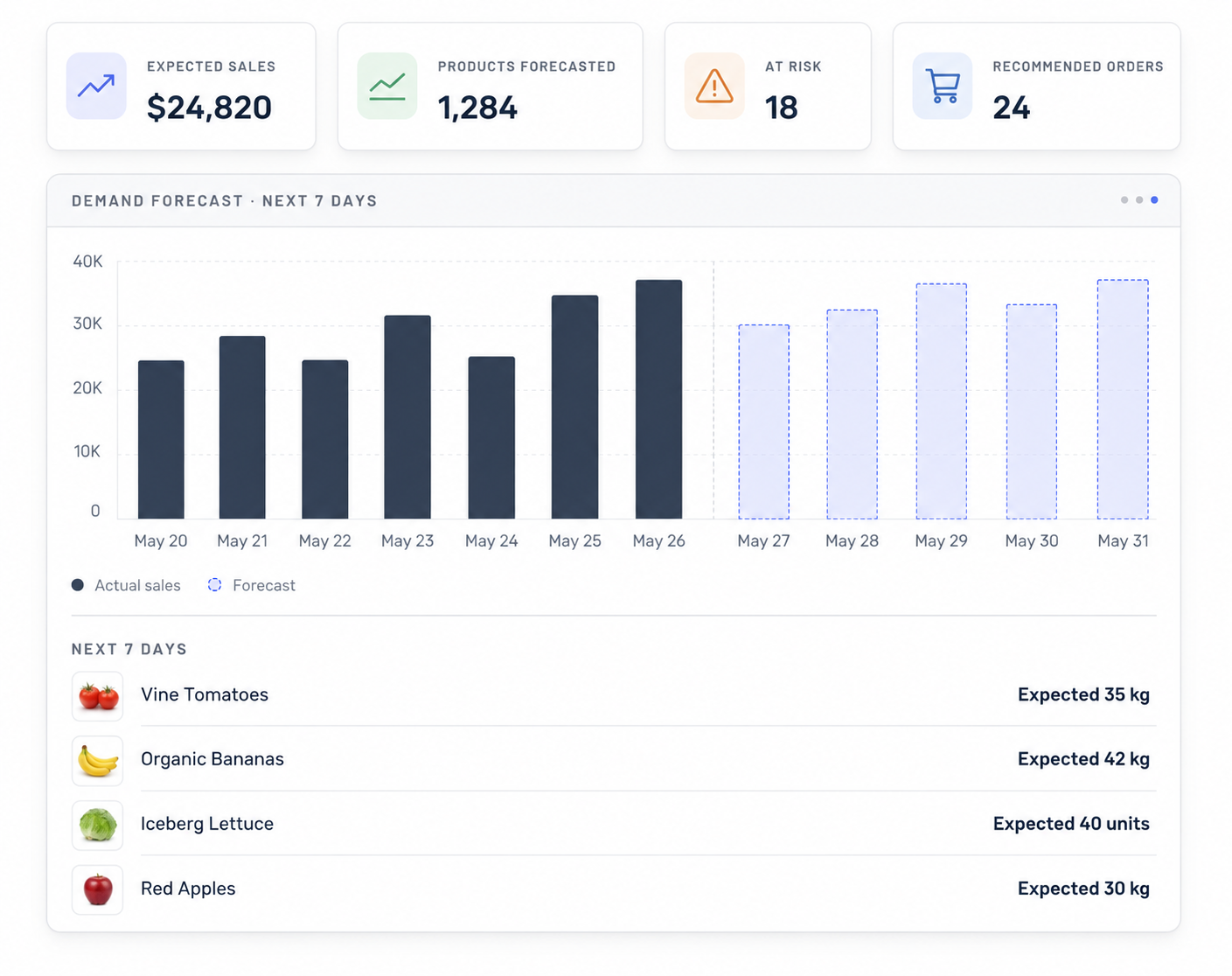
From sales to forecast
Your sales history tells a story about what’s next.
WECOMM turns your existing retail data into forward-looking demand signals.
Product-level forecasting
See demand product by product.
Every item carries its own expected demand, remaining cover and recommended action.
| Product | Current stock | Forecast | Days remaining | Status |
|---|---|---|---|---|
| Organic Bananas | 39.7 lbs | 92.6 lbs | 4 days | Reorder |
| Vine Tomatoes | 17.6 lbs | 77.2 lbs | 3 days | Reorder |
| Red Apples | 114.6 lbs | 66.1 lbs | 12 days | No action |
| Iceberg Lettuce | 12 units | 40 units | 2 days | Urgent |
Stockout risk
Know what could run out next.
Identify products approaching their reorder point before they become a problem.
Review recommendations- Iceberg LettuceEstimated stockout · 2 days
- Vine TomatoesEstimated stockout · 3 days
- Organic BananasEstimated stockout · 4 days
Smart reorder calculation
Turn a forecast into an order.
WECOMM considers expected demand, available inventory and incoming stock when determining recommended purchases.
- Expected demand77.2 lbs
- −Current stock17.6 lbs
- −Incoming stock11.0 lbs
Sometimes the smartest order is no order.
Avoid unnecessary purchasing when existing and incoming inventory already covers expected demand.
Built for grocery
Forecast the products that change every day.
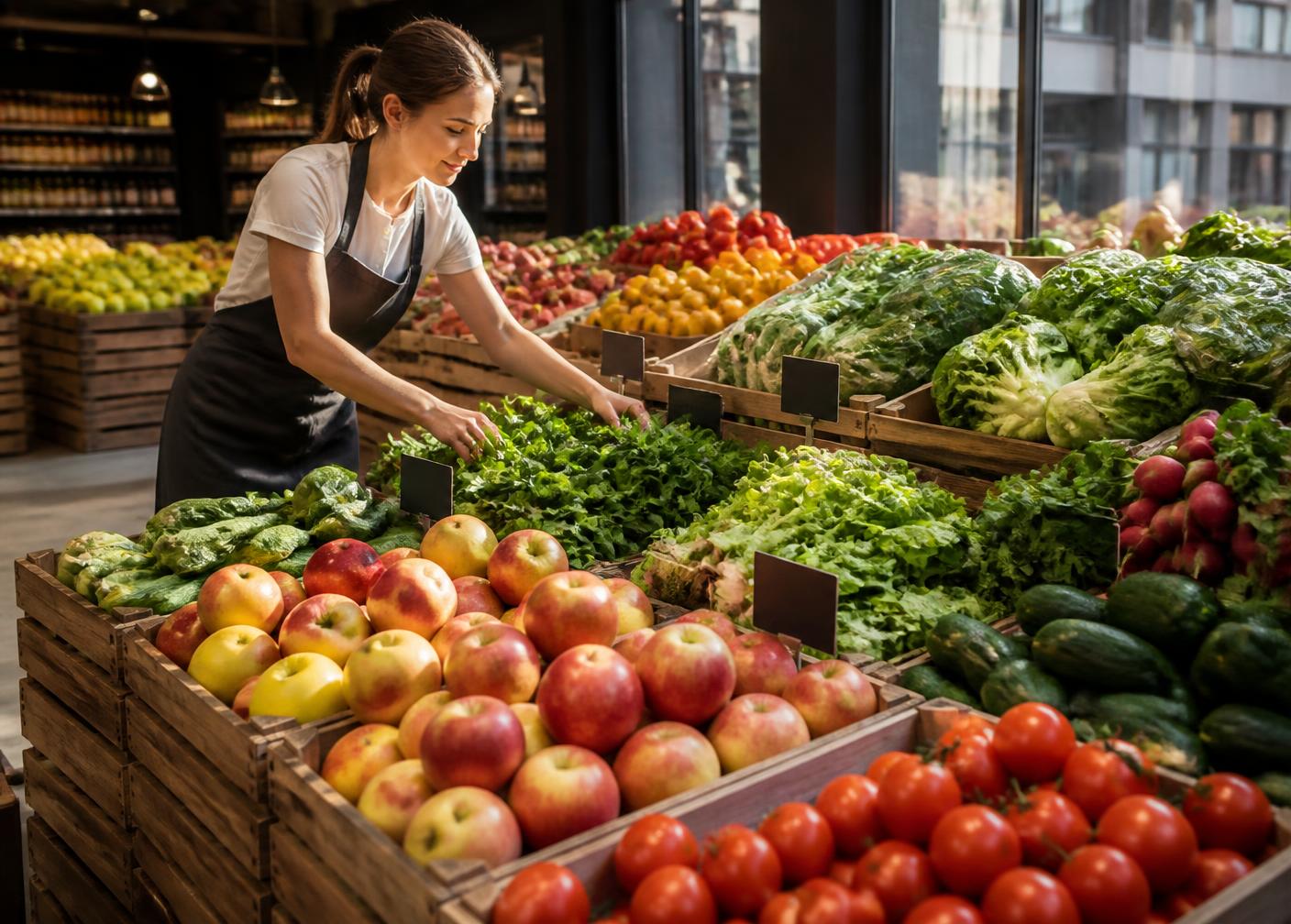
Fresh produce and other fast-moving products can be difficult to predict. WECOMM connects sales, inventory and demand signals to help grocery teams plan with better information.
| Product | 7-day demand | Current stock | Waste | Reorder |
|---|---|---|---|---|
| Bananas | 92.6 lbs | 39.7 lbs | 2.6 lbs | 41.9 lbs |
| Tomatoes | 77.2 lbs | 17.6 lbs | 5.3 lbs | 48.5 lbs |
| Lettuce | 40 units | 12 units | 6 units | 30 units |
| Apples | 66.1 lbs | 114.6 lbs | 1.8 lbs | — |
| Avocados | 52.9 lbs | 24.3 lbs | 2.4 lbs | 30.9 lbs |
Multi-store
See demand across every location.
Understand which products are moving across stores and where inventory may need attention.
Bananas
High demand
Tomatoes
Stable
Lettuce
At risk
Available stock
124 units
Viewing Store #1 — high demand.
Connected intelligence
Forecasting works better when everything is connected.
WECOMM connects the data created at checkout with the decisions made in the back office.
Benefits
Make better purchasing decisions with better visibility.
Reduce stockouts
Spot products approaching their limits.
Reduce overbuying
Avoid unnecessary orders when inventory already covers demand.
Plan ahead
See expected demand before placing orders.
Save time
Turn data into practical recommendations.
Forecasts are estimates based on your own sales and inventory history — reviewed and approved by your team before any order is sent.
Know what’s coming next.
WECOMM turns everyday retail data into clearer demand and purchasing decisions.